
SAP Basic Navigation in English
Introduction to SAP and end-to-end business processes
Learn how the different parts of a company are connected in SAP. The course gives you a broad introduction to SAP and takes you through the main business processes in finance, HR, procurement, production, sales and service.
- 6-week course for unemployed jobseekers with no personal fee
- Taught in English
- 12 months' access to SAP Learning Hub
- Become SAP certified with 4 certification attempts included
- Mentor-supported learning with live sessions
- Access to SAP's official learning material
- Practical exercises in SAP systems
- Course certificate after completing the programme
- Access to job search courses, also after the programme
- Pris til jobcentret: DKK 22.000 ekskl. moms
Ingen egenbetaling
- Nyledige.dk
- Kurser
- SAP kurser
- Introduction to SAP
SAP is used across many departments in an organization. A sales order can affect production. Production needs materials purchased by procurement. Supplier invoices end up in finance. Payroll costs from HR are posted to accounting. And management needs data from all of these areas to understand how the company is performing.

This is one of the basic ideas behind SAP.
This course gives you a broad understanding of how these processes work and, just as importantly, how they are connected.
The course is based on SAP's official Learning Journey Applying End-to-End Business Processes in SAP and the course Exploring End-to-End Business Processes in SAP.
You work with the main processes used across a company and learn the concepts, data and organisational structures that connect them.
The course is therefore relevant if you are new to SAP and want a solid foundation before specialising in a particular area.
SAP certification
Your SAP Learning Hub access includes four SAP Certification exam attempts.
The certification most closely connected to this course is:
SAP Certified, Implementation Consultant, End-to-End Business Processes in SAP (C_IEE2E)
The certification validates your ability to work with core end-to-end business processes across SAP Business Suite.
Unlike the older SAP certification model, this is a system-based assessment. You are tested on your ability to perform tasks in an SAP environment rather than only answering traditional multiple-choice questions.
The certification is optional – but why not give it a try?

 7022 7226
Download flyer about the course

Planlagte kursusforløb
Online
19. oktober 2026
SAP-ONE-11560-191026-E-EN
- Starter 19. oktober 2026
- Slutter 27. november 2026
- NB: Kurset er på engelsk / This course is in English
E-learning
Dette kursus afvikles som ren e-learning uden tilstedeværelsesundervisning.
Online
2. november 2026
SAP-ONE-11561-021126-E-EN
- Starter 2. november 2026
- Slutter 11. december 2026
- NB: Kurset er på engelsk / This course is in English
E-learning
Dette kursus afvikles som ren e-learning uden tilstedeværelsesundervisning.
Online
16. november 2026
SAP-ONE-11562-161126-E-EN
- Starter 16. november 2026
- Slutter 25. december 2026
- NB: Kurset er på engelsk / This course is in English
E-learning
Dette kursus afvikles som ren e-learning uden tilstedeværelsesundervisning.
Online
30. november 2026
SAP-ONE-11563-301126-E-EN
- Starter 30. november 2026
- Slutter 8. januar 2027
- NB: Kurset er på engelsk / This course is in English
E-learning
Dette kursus afvikles som ren e-learning uden tilstedeværelsesundervisning.
Skal vi ringe dig op?
Ja, tak - jeg vil gerne vide mere om, hvordan jeg kommer på SAP Basic Navigation TS410
Er du jobkonsulent?
Du kan tilmelde en borger til et kursusforløb, hvis du på forhånd har aftalt det med vedkommende og har fået tilladelse til at overføre borgerens personoplysninger til Nyledige.
Why choose SAP training in English?
SAP is used by large Danish and international companies, where English is often the working language across departments and national borders.
SAP's own terminology is also largely English. Purchase order. Sales order. Business partner. General ledger. Material requirements planning. Lead-to-cash.
Learning the terminology in English can therefore be an advantage when you apply for jobs in companies using SAP.
This version of the course is particularly suitable if English is your preferred professional language or if Danish is not your first language.
The learning material, exercises and SAP certification are in English.

From individual tasks to end-to-end processes
SAP is not just a collection of separate programs for finance, purchasing, sales and HR.
The interesting part is what happens between the departments.
A company may receive an order from a customer, plan production, purchase missing materials, manufacture and deliver the product, issue an invoice and finally receive payment.
Several departments are involved, but from the company's point of view it is one connected process.
This course focuses on these connections.
You learn how SAP supports business processes from beginning to end and how data created in one part of the organization can be used in another.
SAP Learning Hub included for 12 months
The course includes 12 months' paid access to SAP Learning Hub.
SAP Learning Hub is SAP's own learning platform. It gives you access to official Learning Journeys, learning content, expert-led sessions and hands-on practice systems where you can work with SAP yourself.
Your access therefore continues well beyond the six-week course period.
During the course, you can concentrate on building a solid foundation, working through the central learning material and using the support from your mentor. Afterwards, you can continue studying, prepare for certification or explore other SAP areas relevant to the jobs you want to apply for.
You do not have to learn everything about SAP in six weeks.

Course format
SAP Basic Navigation in English is a six-week online course for unemployed jobseekers.
Most of the learning is self-paced through SAP Learning Hub. You follow SAP's official learning material and complete exercises in SAP's practice environments.
The programme is mentor-supported and includes live sessions where you can ask questions, discuss the material and get help if you run into problems.
Participants have different professional backgrounds and different levels of previous ERP experience. For that reason, the course is not divided into a fixed week-by-week syllabus.
Some participants will spend more time on accounting. Others may find procurement or production more familiar and move through those sections faster.
The important part is that you understand the connections.

Where in Denmark is the course approved?
Regional Positive Lists
SAP Basic Navigation in English is approved on the Regional Positive Lists for:
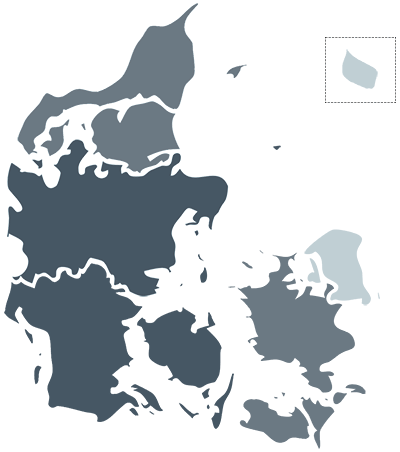

- Southern Denmark (Syddanmark)
- Central Denmark (Midtjylland)
If you live in Zealand (Sjælland) or Northern Denmark (Nordjylland), the course can also be approved through the Regional Positive Lists, as it is approved in a neighbouring region.
Does SAP experience increase your job opportunities?

There are lots of job opportunities when you have a SAP certification. In average, there will be about 2-300 jobs within SAP.
These companies are using SAP






Course content
The course covers the following main areas:
You start by looking at the main processes found in a modern company and how different departments depend on each other.
You learn to recognise the links between finance, controlling, HR, procurement, production, sales and service and see how SAP solutions support the flow of information between them.
You are introduced to the current SAP Business Suite and some of the technologies SAP is building into its business applications.
The course includes SAP Business AI, Joule, Industry AI and the idea of an increasingly autonomous enterprise, where AI and agents can support employees and business processes.
The aim is not to turn you into an AI specialist. You need to understand where these technologies fit into the current SAP landscape.
Before you can understand SAP processes, you need to understand how a company is represented in the system.
You work with organisational structures and the relationship between master data, transaction data and documents.
You also learn why shared and consistent data is important when several departments work with the same customers, suppliers, materials and employees.
You are introduced to the processes used to record and report financial activity.
The course covers areas such as:
- general ledger accounting
- accounts payable
- accounts receivable
- asset accounting
- parallel accounting
- planning and actual data
- overhead cost controlling
You see how transactions from other parts of the company eventually affect financial and management accounting.
You follow the employee process from recruitment and onboarding to employee administration and payroll.
The course introduces SAP SuccessFactors and areas including:
- recruiting
- onboarding
- Employee Central
- payroll
- integration between payroll and finance
This gives you an overview of how HR processes connect with the rest of the organisation.
You follow the procurement process from identifying a need to paying the supplier.
You work with concepts including:
- requisitioning
- contracts
- purchase orders
- goods movements
- warehouse processing
- supplier invoices
- payments
You also see how procurement is connected to inventory, production and financial accounting.
You are introduced to the main processes involved in planning and producing goods.
Topics include:
- production processes
- master data
- product costing
- demand planning
- Material Requirements Planning, MRP
- production orders
- period-end closing
The course shows how sales demand, available materials, procurement, production and finance are connected.
You follow the sales process from the first customer contact to payment.
You work with:
- sales master data
- presales activities
- sales order management
- delivery
- shipping
- customer billing
- incoming customer payments
This makes it possible to see the complete chain from customer demand to revenue in the company's accounts.
Sales does not necessarily end when a product has been delivered.
The course also introduces service processes, including:
- service master data
- service contracts
- invoicing
- recurring service
- service analytics.
You learn how service activities connect with customers, sales, spare parts, procurement and finance.
You can use one of your four attempts for C_IEE2E and use the remaining attempts later for the same certification or for other SAP certifications.
If you pass every exam on your first attempt, you could in principle earn as many as four different SAP certifications during your SAP Learning Hub subscription.
Who is the course for?

SAP Basic Navigation in English is aimed at unemployed jobseekers who want a broad introduction to SAP and the business processes SAP supports.
It may be relevant if you have experience within areas such as:
- finance or accounting
- administration
- purchasing
- logistics
- supply chain
- production
- sales
- customer service
- HR
- project management
- IT or ERP systems.
You do not need to be a programmer or an IT specialist.
In fact, much of SAP is about understanding business processes rather than technology.
The course can also be a useful first step if you later want to specialise in areas such as SAP Finance, Controlling, Procurement, Sales, SuccessFactors, Business Intelligence or SAP development.
Requirements
You must be able to study professional course material in English and work independently with e-learning and practical exercises.
Previous experience with SAP is not required.
Experience from finance, administration, logistics, purchasing, production, HR, sales or another business function can be an advantage because you will recognise many of the processes covered in the course.
You will need a computer with a stable internet connection for the online course, live sessions and SAP practice environments.

What can SAP skills be used for?
Knowing SAP does not automatically make you an SAP consultant.
But many people who use SAP professionally are not consultants. They work in accounting, procurement, logistics, production, sales, HR, administration or customer service and use SAP as part of their daily job.
A broad understanding of SAP can therefore be relevant for many different types of positions.
And if you later decide to move towards a specialist or consultant role, this course gives you a foundation on which to build.
After the six-week course
Your SAP learning does not end when the six-week course period finishes.
You retain access to SAP Learning Hub for up to 12 months and can continue using SAP's learning resources and practice environments and prepare for certification.
You can also continue with more specialised SAP Learning Journeys depending on your experience and the type of job you are looking for.
The six weeks will get you started. The rest is up to you.